
- Products
- Product Details-SiS HMS

Hospital Management System: Features, Modules, Functions, Advantages
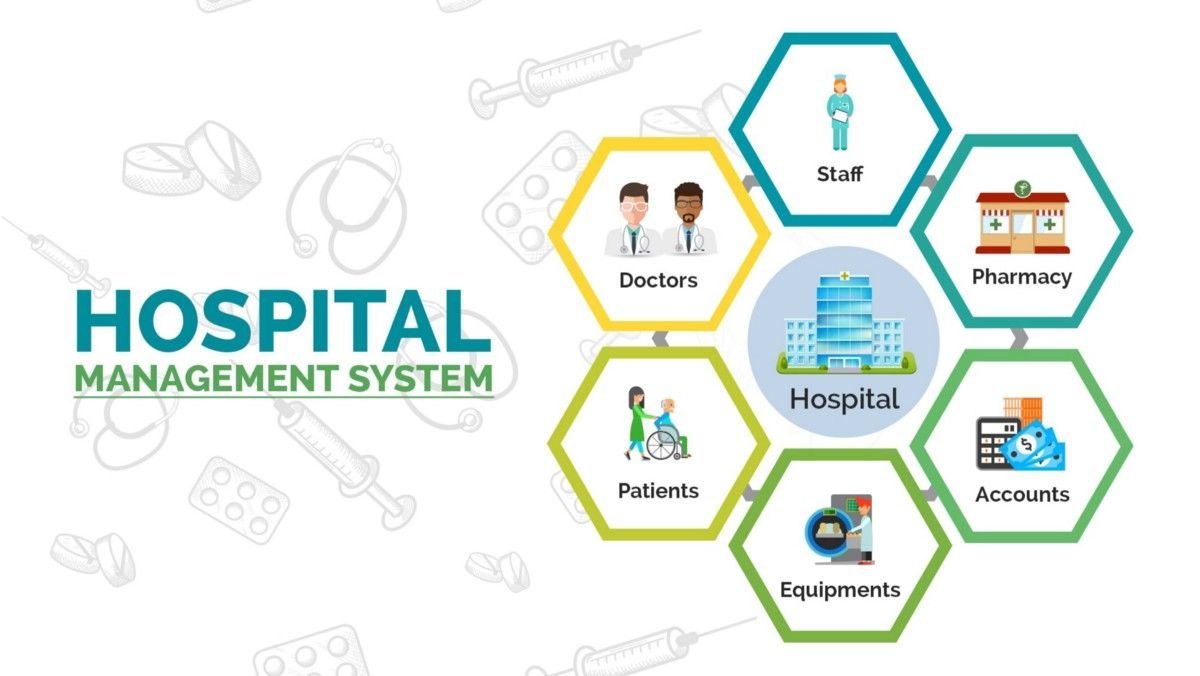
The implementation of hospital management system project provides the institution with different advantages that improve the service quality and efficiency. As mentioned above it is created for three groups of users: patients, hospital staff and management, and third-parties like drug suppliers and insurance companies. The interaction between them conveys the general performance. The benefits received by a certain group of users also positively influence the work of the others. Cooperation and communication are the fundamental requirements here.
Overview
- Hospital Management Software (HMS) is a comprehensive digital solution designed to optimize and streamline various hospital operations. It integrates multiple functions such as patient management, billing, electronic medical records (EMR), inventory tracking, and administrative tasks into a single platform. By automating processes, HMS enhances operational efficiency, reduces manual errors, and ensures better patient care.
- Modern HMS solutions are cloud-based, providing healthcare providers with real-time data access, secure storage, and seamless coordination between departments. These systems improve hospital workflow, enhance decision-making, and enable compliance with regulatory standards, making them essential for hospitals, clinics, and multi-specialty healthcare centers.
Application Features for users
1. Patient management :
It is used to control patient flow. It can be used to register them, get the data of the patients’ health condition, view the treatment and check the medical history and reports.
2. Facility management :
The facility management module is responsible for tracking and maintaining the room availability, the occupancy status as well as various kinds of administrative documentation.
3. Registration and Tracking :
Captures patient demographic information and maintains a unique identifier for each patient. It tracks patient history, treatments, and progress throughout their stay.
4. Billing and Invoicing :
The billing module automates invoice generation, payment tracking, and financial transactions. It eliminates billing errors, prevents revenue leakage, and integrates with insurance providers for hassle-free claims and reimbursements.
5. Laboratory Pathology Management :
This feature streamlines lab workflows by automating test requests, sample tracking, and result generation. It minimizes manual errors, enhances efficiency, and allows patients to receive their lab reports digitally, improving overall patient care.
6. Patient Registration :
A hospital management system simplifies the patient registration process by digitally storing personal details, medical history, and emergency contacts. This helps in faster patient onboarding, reduces paperwork, and ensures a structured database for future reference.
Benefits of Hospital Management Software
Key System Benefits
1. Enhanced Communication
2. Improved Accessibility to Patient Information
3. Cost-Efficiency.
Improving and facilitating interdepartmental communication is one of the key benefits of a hospital management system. These systems create a unified platform for information exchange across all hospital departments, which results in better coordination among healthcare professionals. This seamless flow of information also reduces miscommunication and delays in patient care.
The system streamlines operations, reduces paper-based processes, and improves resource allocation, contributing to a healthier bottom line for healthcare institutions. By automating many administrative tasks, hospitals can reduce staffing costs and redirect resources to patient care. Additionally, efficient inventory management ensures that supplies are maintained at optimal levels, which helps control and reduce hospital expenses
4. Decreased Turnaround Times
5. Centralized Administrative Management
6. Improved Patient Experience
Another advantage of hospital management software is its ability to reduce wait times and accelerate service delivery. Automated scheduling and streamlined workflows contribute to quicker patient processing and improved overall efficiency. This improves patient satisfaction and also allows hospitals to serve more patients without compromising on service quality. Faster processing also means that critical care can be administered more quickly in urgent cases.
One of the key advantages of hospital management software is its ability to centralize administrative tasks. By integrating functions such as staff scheduling and inventory management into a single platform, the system eliminates the need for multiple disconnected systems. This reduces the potential for errors and inconsistencies. Additionally, it provides hospital administrators with a comprehensive overview of hospital operations, enabling more effective decision-making and strategic planning.
Hospital management system advantages extend to patient satisfaction. Smoother appointment scheduling, reduced waiting times, and better communication between patients and providers all contribute to an enhanced patient experience. Patients can often access their own health records and test results through patient portals, empowering them to take a more active role in their healthcare.
Not sure how to use your company's data to your advantage?
Let us help you make the most of your data. Contact us today.