
Challanges
The healthcare system faced a steep decline in adherence to Antiretroviral Therapy (ART), a cornerstone treatment for HIV/AIDS patients. The COVID-19 pandemic amplified these issues by disrupting healthcare access, increasing patient anxiety and depression, and creating disparities in treatment delivery. Patients frequently missed doses and appointments, while healthcare providers lacked real-time visibility into adherence data. The absence of timely insights made it difficult to allocate resources effectively, leading to inconsistent service delivery and poorer health outcomes.
Scope of Project
The project aimed to develop a real-time analytics solution that would enable healthcare providers to track ART adherence, monitor patient well-being, and manage the impact of external disruptions such as pandemics on treatment continuity. The focus was on creating a standardized, data-driven approach to improve patient support, optimize resource allocation, and ensure consistent healthcare delivery across all treatment centers.
Solution Provided
To address these challenges, a comprehensive data and analytics framework was implemented using Microsoft’s ecosystem of tools.
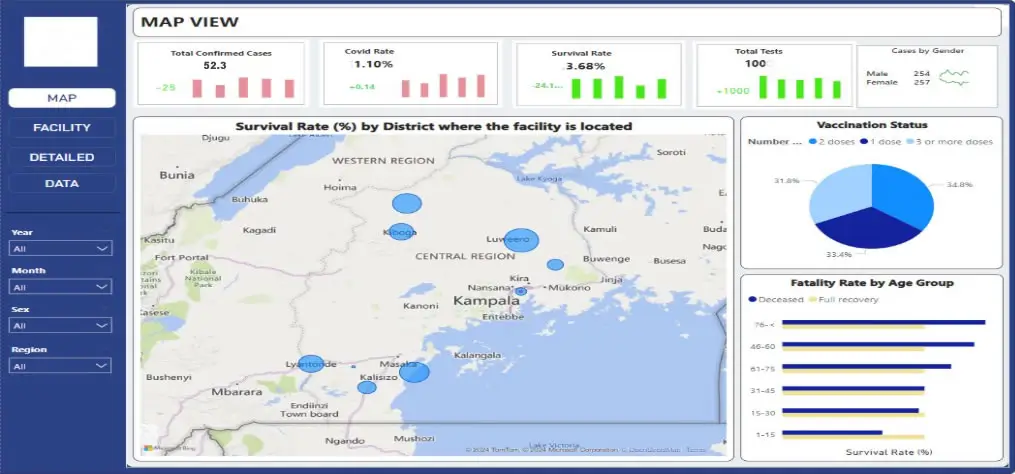
- A centralized Power BI dashboard was designed to bring together ART adherence data, patient well-being indicators, vaccination records, and regional performance metrics. This dashboard provided a unified view of treatment outcomes in near real time.
- Data preparation and integration involved consolidating information from multiple sources such as patient records, appointment logs, and survey data. This ensured that all metrics were accurate, up-to-date, and consistent.
- KPI monitoring allowed providers to track adherence levels, vaccination coverage, and treatment continuity, while automated alerts flagged at-risk patients requiring immediate follow-up.
- Power Apps forms were deployed to simplify data entry for healthcare staff, enabling quick updates on patient interactions, adherence checks, and follow-up visits.
- Interactive features allowed healthcare managers to drill down into specific clinics, demographic groups, or treatment outcomes, enabling precise interventions.
- Predictive analytics were applied to identify patients most likely to default on treatment, helping providers take preventive action.
This solution not only created visibility into patient adherence but also gave healthcare providers the ability to act proactively, reduce treatment interruptions, and better manage staff and resource allocation.
Business Impact
- Improved adherence rates, reducing the risk of treatment failure and improving long-term health outcomes.
- Enhanced patient support, with early identification of mental health challenges such as anxiety and depression.
- Stronger continuity of care, with vaccination tracking and treatment monitoring reducing the risk of disruption.
- Efficient resource allocation, ensuring services were directed to the areas and patients that needed them most.
- Proactive decision-making, shifting the model from reactive crisis management to proactive healthcare delivery.
Technical Architecture
- Visualization & Analytics: Power BI (real-time dashboards, KPI monitoring)
- Data Collection & Entry: Microsoft Power Apps (for staff data input and patient updates)
- Data Storage & Collaboration: SharePoint (central repository and data sharing)
- Data Processing & Integration: Excel and survey datasets integrated into the BI platform